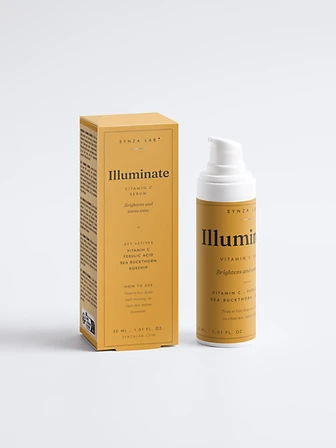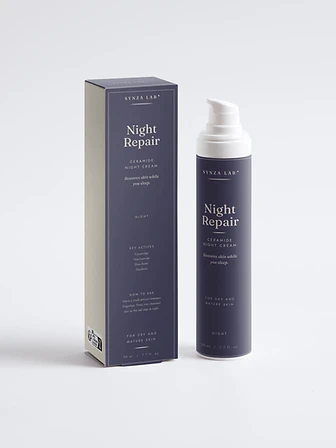
A lot of people use the same products morning and night and wonder why their skin looks neither protected nor repaired. The truth is your skin has two completely different jobs across 24 hours: defending against the day and repairing overnight. Matching your routine to those jobs is the difference between skincare that works and skincare that just sits on the shelf.
By day, skin faces UV, pollution, blue light and weather. By night, it shifts into repair mode, increasing cell turnover and rebuilding the barrier. The same product that protects in the morning can be pointless, or even counterproductive, at night. And the heavy repair cream that works overnight can leave you greasy and prone to SPF pilling by day.
Your skin’s day and night cycle
Skin follows a circadian rhythm. During the day, sebum production peaks in the early afternoon, and the barrier focuses on defence. At night, cell turnover and repair increase, peaking around the small hours, and transepidermal water loss is higher, which is why skin often feels drier in the morning. This is why the evening is the right window for repair actives and richer hydration, and the morning is for protection.
What the morning routine is for
Protection and glow. The morning is about antioxidant defence, hydration and sun protection. You are preparing skin for a day of environmental stress, so the priorities are a vitamin C serum to neutralise free radicals, hydration to plump, and SPF to block UV, which causes 80% of visible ageing.
What the evening routine is for
Repair and renewal. Overnight, skin does its heaviest lifting: cell turnover peaks, and the barrier rebuilds. This is the window for actives that increase sun sensitivity, like retinol alternatives, and for richer creams that would be too heavy under daytime SPF. A ceramide night cream and a bakuchiol oil belong here, not in the morning.
What belongs where, at a glance
- Vitamin C: morning, to defend against daytime free radicals.
- Retinol and bakuchiol: evening, to support overnight renewal.
- Hyaluronic acid: both, on damp skin, sealed with moisturiser.
- Rich night cream: evening only, too heavy for daytime SPF.
- Lightweight day cream: morning, sits well under SPF and makeup.
- SPF: morning only, every single day, non-negotiable.
A morning routine by skin type
The structure stays the same, but textures shift. Oily and combination skin uses a gel cleanser, a lightweight antioxidant serum, an oil-free gel moisturiser and a fluid SPF. Dry skin leans on a cream cleanser, a richer day cream and a hydrating SPF. Sensitive skin keeps it minimal and focuses on barrier support plus SPF. The order never changes, only the weight of the products.
An evening routine by skin type
Oily skin double cleanses, applies a treatment like bakuchiol, and seals with a light gel-cream. Dry skin uses a balm cleanse, a hydrating serum, bakuchiol and a rich ceramide cream. Sensitive skin keeps actives gentle and prioritises barrier repair. The evening is where you tailor the routine most, because this is when skin does the work of rebuilding.
What happens if you swap them
Using retinol in the morning increases sun damage risk and wastes the ingredient. Using a heavy night cream in the morning causes SPF to pill and makeup to slide. Skipping SPF because you used vitamin C leaves skin undefended. And using the same lightweight gel at night, with no repair cream, means you miss the overnight window when skin actually rebuilds. Matching the routine to the time of day is what lets each product do its job.
Do you need different products for morning and night?
Not necessarily a full second set. The minimum difference is SPF in the morning and a richer moisturiser or active at night. A shared cleanser and a shared hyaluronic serum work in both routines. What changes is the treatment step, vitamin C by day, retinol alternative by night, and the final moisturiser, lighter by day, richer by night. That is enough to cover both jobs.
Common mistakes
Using retinol in the morning wastes it and increases sun damage risk. Skipping SPF because you used vitamin C leaves skin undefended. Applying a heavy night cream in the morning causes SPF to pill and makeup to slide. And using the same lightweight gel at night, with no repair cream, means you miss the overnight window when skin actually rebuilds.
A real-life scenario
Someone uses their vitamin C serum and rich night cream both morning and night, and skips SPF because the cream feels heavy. Their skin looks dull and they burn easily in summer. Splitting the routine, vitamin C and SPF in the morning, night cream and bakuchiol in the evening, transforms it within a month. The products were right, the timing was wrong. Skin defends when you ask it to defend, and repairs when you let it.
The bottom line
You do not need two entirely separate routines. You need to assign each product to the half of the day where it does its best work: antioxidants and SPF in the morning, repair actives and richer hydration at night. Get that split right and a modest product wardrobe outperforms a drawer full of mismatched formulas.
Key takeaways
- Morning routines defend: antioxidant serum, hydration, SPF.
- Evening routines repair: retinol alternatives, ceramides, richer creams.
- Vitamin C is for the morning, retinol and bakuchiol for the evening.
- Hyaluronic acid works in both, always on damp skin, always sealed.
- You do not need two full sets, just the right product in the right half of the day.
Your questions
Frequently asked
If you found this useful